C&M Railroad

The C&M Story

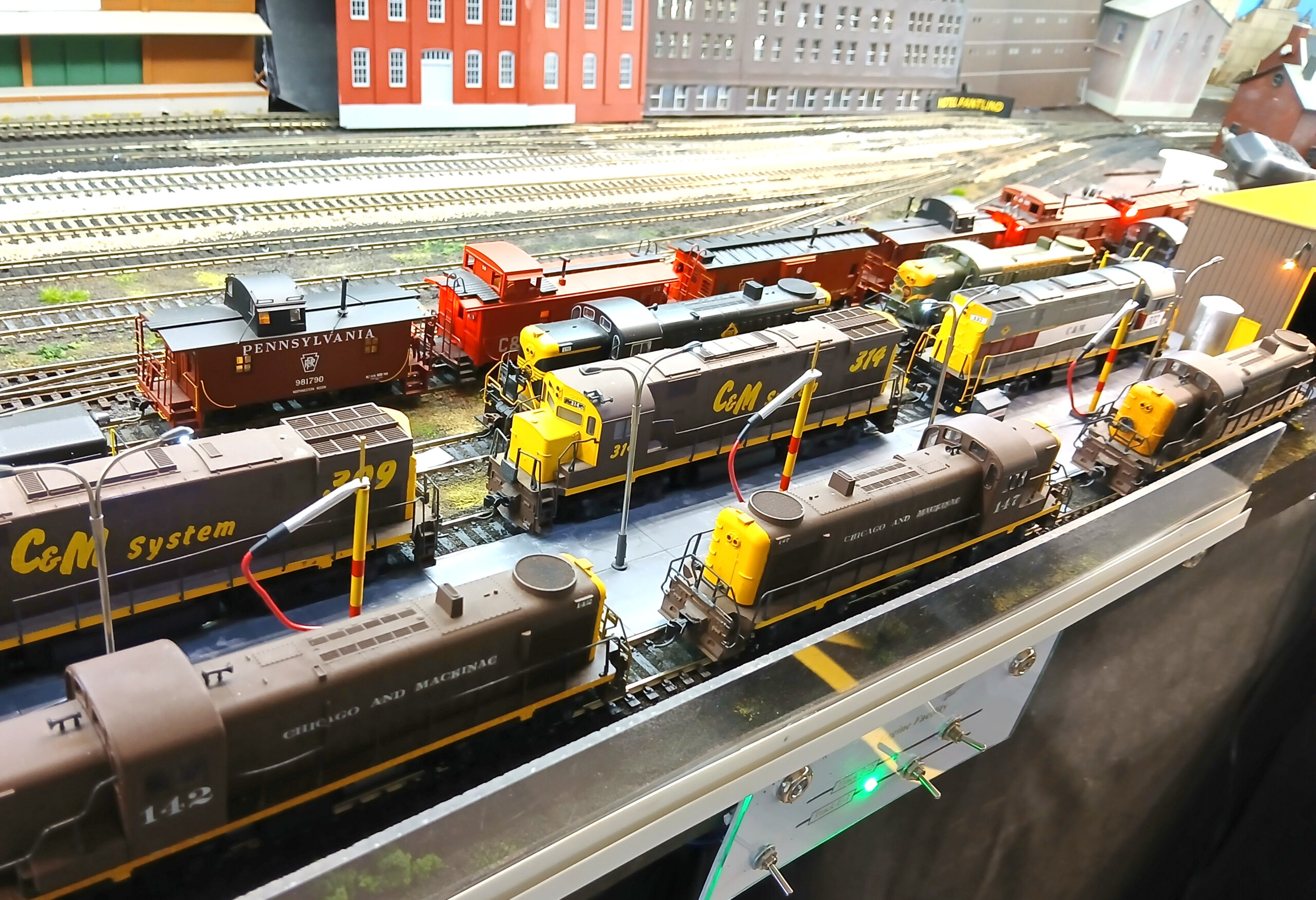
The Chicago & Mackinac Railroad (C&M) represents what could have been. It is a fictional joint venture between the Pennsylvania (PRR), SOO Line (SOO) and Canadian National (CN) Railroads, to provide a “Bridge” from Canada and Northern US railroads, around Chicago to the rest of the country. It was formed to bypass much of the rail congestion surrounding the other routes mainly around Chicago.

.

THE JOINT VENTURE:

In the 1960’s, it was no secret that the Pennsylvania Railroad was trying to divest itself of their rail line in Western Michigan [the ex: Grand Rapids & Indiana (GR&I) Line]. In our alternative reality, the C&M arranged a joint venture between the PRR, the SOO Line & the Canadian National RR to revive the old GR&I line (nicknamed The Fishing Line) and be a positive venture for all of the partners.


The SOO Line and the CN got a direct line to Fort Wayne, Indiana where the PRR could direct traffic to anywhere in the US and the PRR got rid of an unprofitable rail line and increased traffic through Fort Wayne. It was a win, win, win proposition and all three partners had access to an efficient shortcut to and around Chicago and access to the rest of the country.


Each partner donated assets, old equipment and cash to the venture and management began updating the railroads infrastructure. The C&M started as a rag-tag, hand-me-down venture but with very low overhead and aggressive marketing, the organization is becoming financially successful.

LOCAL:
Much like the real-life Detroit & Mackinac Railroad,which never made it all the way to it’s namesake Detroit, the Chicago & Mackinac has yet to make it all the way to Chicago.  Maybe when prosperity hits, a direct Chicago connection could materialize.
 
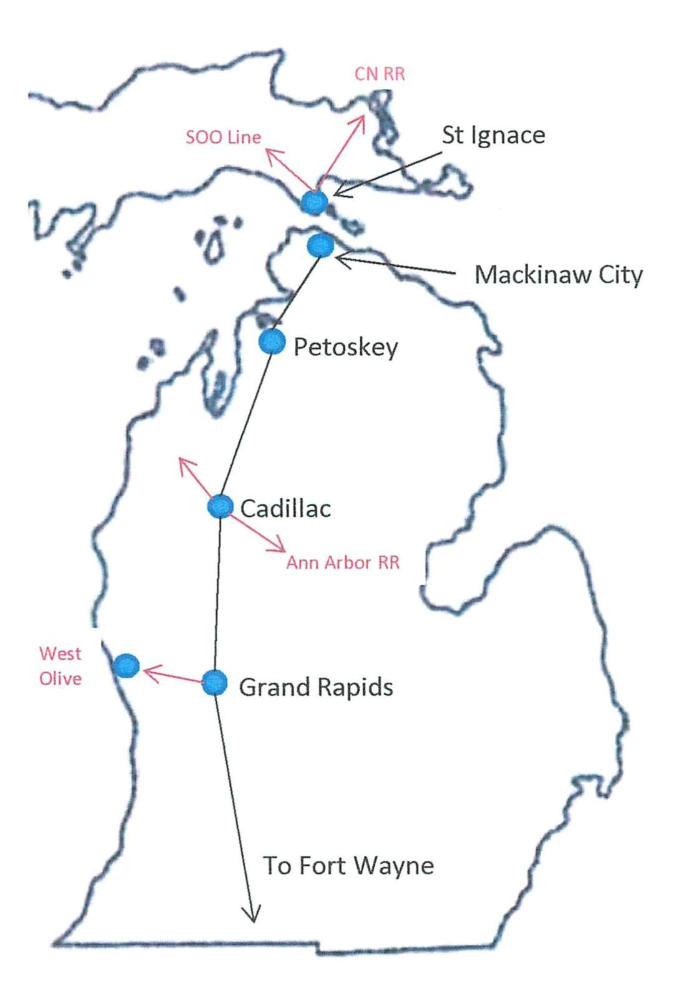
The prototype GR&I started near Cincinnati, OH, ran north through Fort Wayne, IN and continued north through western Michigan all the way to Mackinaw City. Grand Rapids is the southern terminus of the modeled C&M, where we interchange with the PRR in Fort Wayne.  From Fort Wayne, the PRR interchanges with most other eastern railroads and has indirect connections to all of the western railroads.
 
The main railroad yard for the C&M is located in Grand Rapids. Heading north we model the cities of Cadillac and Petoskey and terminate at Mackinaw City where the C&M makes connections with the SOO Line in St. Ignace, in Michigan’s Upper Peninsula, via the Chief Wawatam. The SOO Line subsequently connects with many, many railroads including the DSS&A, the LS&I, DM&IR, Canadian National, the Canadian Pacific and many other railroads.
“THE CHIEF”:
 
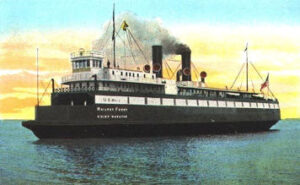
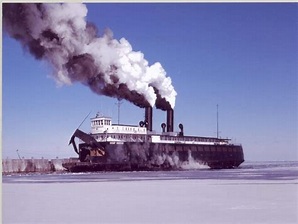
The “Chief” is (was) a hand fired, steam powered railroad car ferry that ran year round from Mackinaw City to St. Ignace. The Straits of Mackinac was home to several railroad car ferries through the years starting in 1882, however the most famous and longest running was the Chief Wawatam. The Chief was built in 1911 in Toledo, Ohio and ran through 1984 when it was finally retired.


A Quick Story about the Chief:                                Because of Mackinaw City residents complaints about the Chief’s smoke and soot, in the Spring of 1968, the Chief was temporarily retired. It was replaced by the railroad car barge, The Manistee, which was powered by the tugboat Muskegon. the experiment failed when the operations was confronted by ice across the Straits of Mackinac and The Manistee had to rescued from the ice by the Coast Guard. The Chief, which was equipped with an ice breaking steel hull, resumed its duties in January 1969, smoke and all.
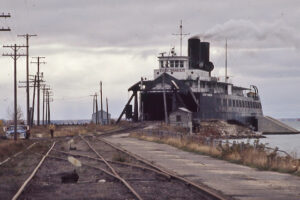
The Chief had 4 tracks and a 26 car capacity. It was 339 feet long with a steel construction. As mentioned, it’s steam power plant was hand fired. Rail cars were loaded from the front and it had upper level staterooms for passengers. The Chief’s final run was on August 21, 1984.

The Chicago & Mackinac Railroad in 1967

In our alternative reality, our corporate line is that the C&M Railroad connects people, places, and possibilities through dependable rail service and a lasting commitment to its communities.

In contrast to it’s early days, and as a result of a keen marketing plan and improved infrastructure, in 1967, the C&M is becoming a financial success.

Based on that success, we have been able to purchase several modern, higher horsepower Alco Century series locomotives, mainly C-425’s. We have changed our logo to reflect our new found success and in 1967, life is good on the Chicago & Mackinac Railroad.

Actually, the real reason for our success is that we executed a “FLAG OUT” similar to what the real life Michigan Northern Railway did in 1978.  Read about the Michigan Northern Railway below.

The Michigan Northern Story

The story starts with the 1976 formation of Conrail, which combined many of the financially troubled railroads in the eastern US. As a result of the forming of Conrail, the old GR&I line of the Pennsylvania RR was abandon and the State of Michigan acquired it. They subsequently leased the line to a new organization, the Michigan Northern Railway (MN).

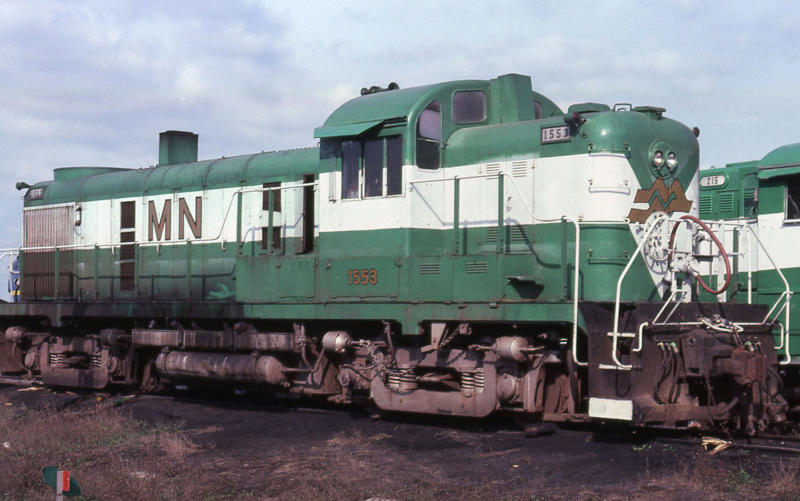
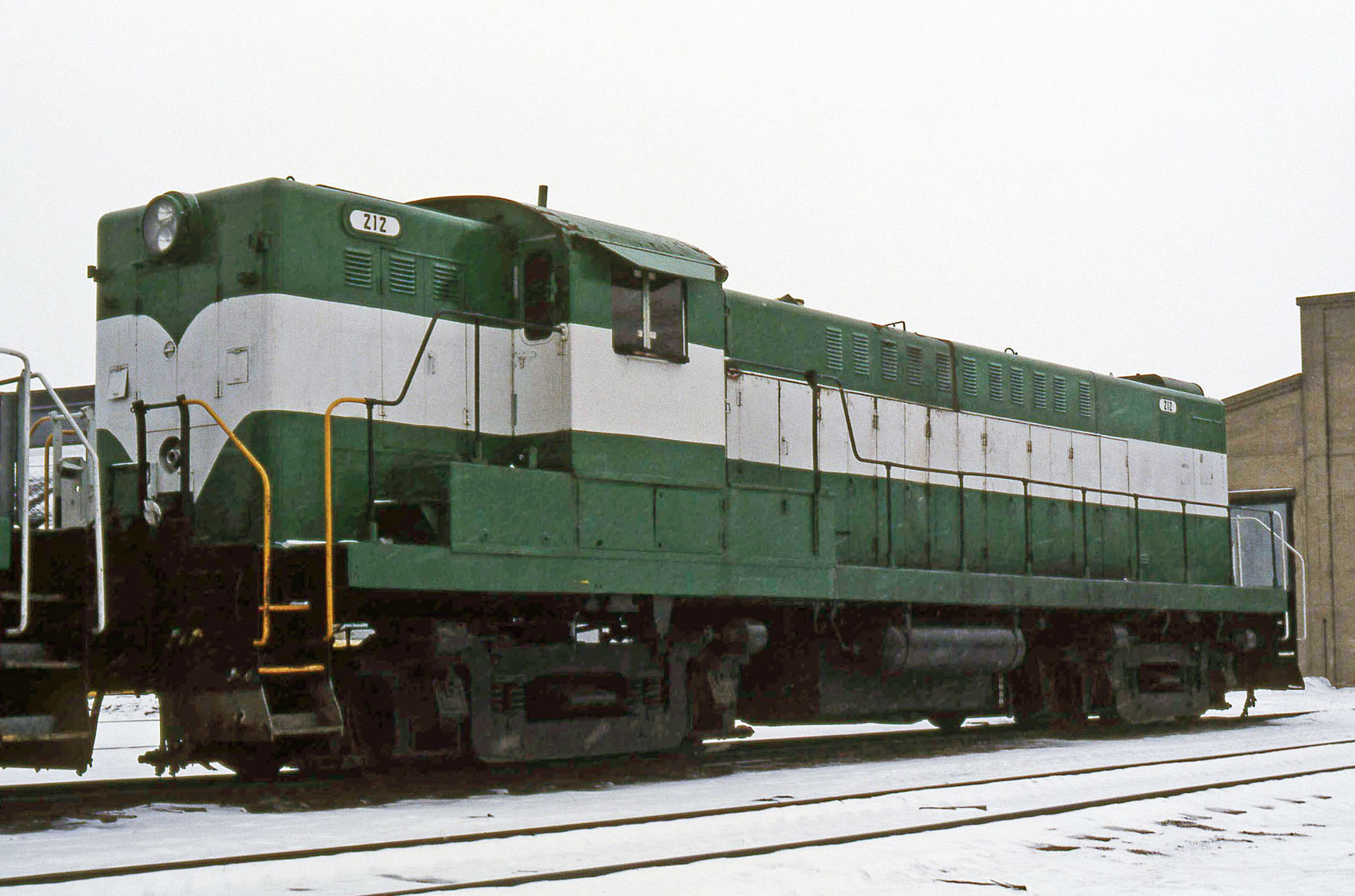
The Michigan Northern began operations in early 1976 and basically ran from Grand Rapids (Comstock Park) to Mackinaw City, via the old GR&I line. In the early years, business was difficult, They acquired well- used old Alco and Baldwin diesel locomotives and even operated nearly extinct Baldwin Sharks.

Then, in 1978, when the ICC raised their tariffs, the MN pulled off a “flag-out”. The tariff increase pertained to all interstate railroads and because the MN was an intrastate railroad (only operated in Michigan), they decided NOT to comply with the increased tariffs.


This gave the railroad an immediate price advantage over all interstate railroads and car moves increased dramatically. In June of 1977, the MN had only 10 cars of bridge traffic. One year later, after the flag-out, in June 1978, the MN moved over 640 cars in bridge service. Revenues increased ten-fold. The Michigan Northern was in fat city.

Unfortunately, all things must come to an end and in 1980, the railroad industry was de-regulated and the Michigan Northern lost it’s price advantage and bridge traffic disappeared. In 1984, the State of Michigan canceled it’s contract with the MN, which struggled until 1986 when they closed the doors for good.

In our alternative reality, the C&M, founded in 1960, pulled off a Flag Out early in the their founding and has reaped the benefits of that move ever since. Since the industry did not de-regulate until 1980 and we are modeling 1967, we have many years of prosperity ahead of us.

A well used MN RS-3 #1553

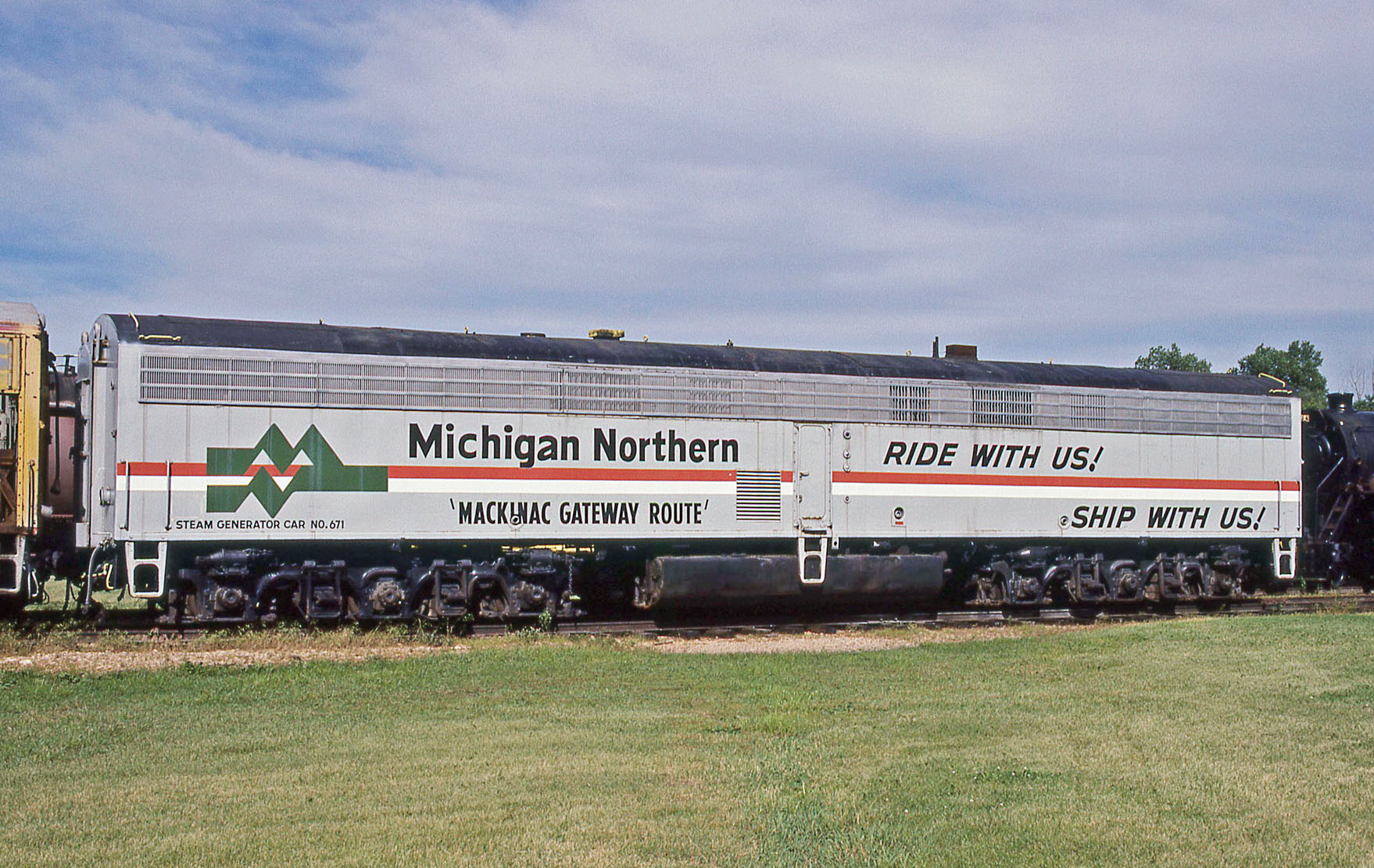
MN Steam generator car

Nice looking MN Baldwin locomotive #212

Scroll to Top